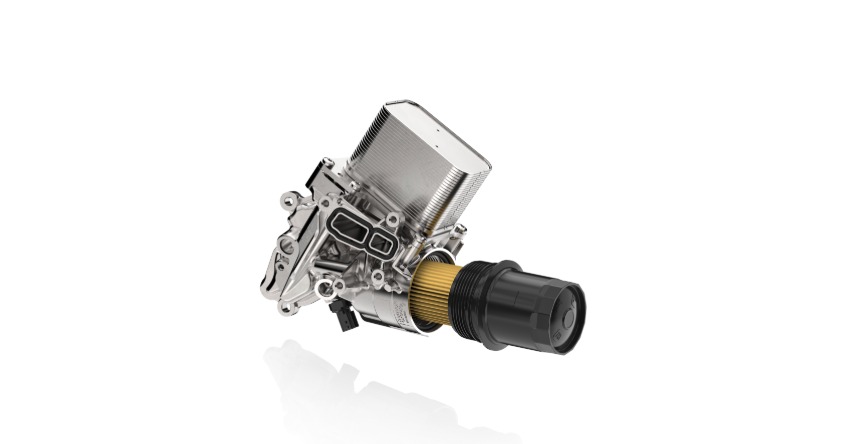
- The module features numerous innovations in terms of both the filter and the thermal management of the lubricant
- Strict manufacturer requirements were met in terms of space and maintenance intervals
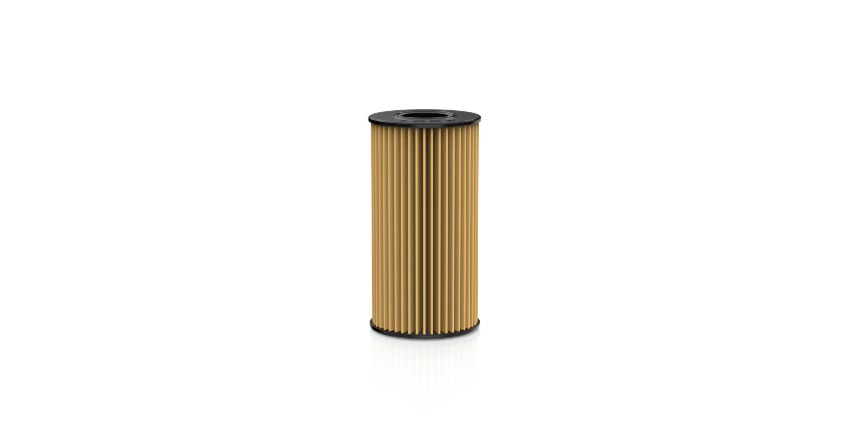
- The cellulose filter is also available on the aftermarket under the UFI and SOFIMA brands
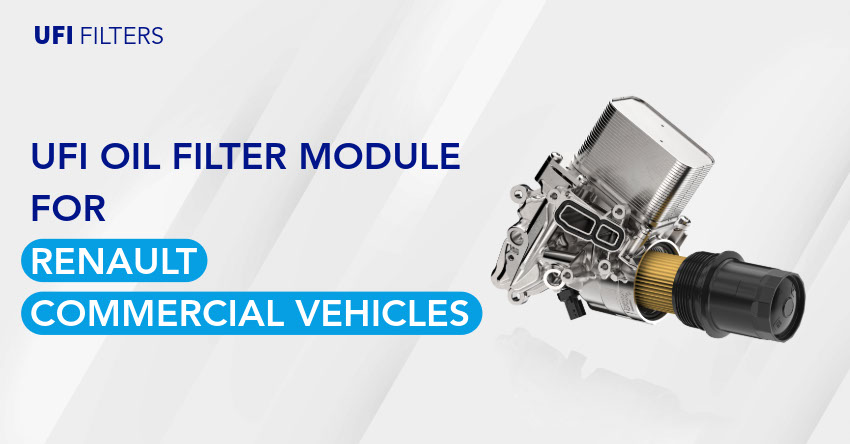
UFI, a global leader in filtration and thermal management solutions, as well as green hydrogen technologies, is fulfilling a major contract to supply original equipment engine oil filtration modules for the Renault Trafic and Renault Master commercial vehicles equipped with the 2.0-litre Blue dCi engine, after production started in the fourth quarter of 2025.
UFI supplies the automaker with the entire oil module, which houses the filter and heat exchanger in its die-cast aluminium body. This allows both filtration, carried out by a cartridge equipped with cellulose media from the FormulaUFI.CELL family, and the job of thermal management, achieved by the exchanger.
“This is an important supply contract with one of the world’s leading manufacturers,” says Stefano Gava, CEO of the UFI Group, “with its high volumes and stringent requirements, it once again highlights UFI’s proven know-how, not only in the filtration sector, but also in the field of thermal management, a field in which the company has long established itself as a trusted partner in original equipment for the top players in the automotive market.”
The various parts that make up the engine oil filtration module for Renault are made in different UFI-owned plants, each of which specialises in the technology of that individual component. Final assembly takes place in a European facility.
The filter: innovative geometry, capacity and durability
The filter contained in the module has numerous innovative features. The first concerns the unprecedented solution developed for the internal seal between the two sides of the filter, the ‘dirty’ side where the lubricant to be filtered arrives, and the ‘clean’ side downstream of the filter media. The seal, which has the important task of perfectly sealing the oil circuit, required specific development work to define its geometry and the necessary material needed.
The filter also meets particularly stringent capacity- and service-life needs, which required an optimisation regarding the choice of filter media and geometry. The result is 99% efficient for particles larger than 40 microns, while its retention capacity allows for a replacement interval of 40,000 kilometres.
The filter cartridge supplied as original equipment to Renault is also available for the aftermarket in the UFI (part number 25.267.00) and SOFIMA (part number S 5267 PE) spare-parts catalogues. Its replacement is particularly easy, thanks to the design of the module.
The heat exchanger: maximum efficiency and compactness
The second distinctive feature of the module concerns thermal management, and, in particular, oil bypass, which is necessary to measure the amount of lubricant to be cooled, based on the engine’s operating temperatures. This function is usually performed by a thermostatic valve, which in the UFI module has been replaced by an orifice. This has been correctly calibrated, thanks to complex fluid dynamics simulations that have made it possible to identify the optimal size. This solution has allowed the exchanger to fully meet the manufacturer’s requirements for space reduction.
In addition, the UFI heat exchanger for Renault has another special feature: the oil coolant enters the aluminium body of the module directly, eliminating the need for dedicated pipes. UFI heat exchangers are made of aluminium that uses a special vacuum brazing technique, which makes them more robust, efficient and cleaner than traditional steel systems. Their quality reduces vehicle consumption, resulting in lower emissions.
The Renault engine
The engine, for which the UFI oil filter module is designed, belongs to the latest generation of Renault commercial vehicle powertrains. With a 4-cylinder architecture, 1,997 cm3 displacement and high-pressure common-rail fuel injection, this highly efficient, low-emission engine is available in several power ratings (105, 130, 150 and 170 hp). It is used in the Trafic and Master 2.0-liter Blue dCi van range, offering significant fuel savings and high overall autonomy.